Global Warming Concerns
Global warming is a critical concern for Colorado, the Rocky Mountain region, and the rest of our planet. Greenhouse gas emissions, a byproduct of human consumption of dirty fossil fuels, are significantly increasing average global temperatures. The world's leading climatologists predict that global warming will continue, causing ice caps to melt, sea levels to rise, more intense storms and flooding, as well as increased drought and accompanying wildfires.
See Global Climate Change Impacts in the United States – the most recent federal study on the potential impacts of global warming.
Colorado is especially sensitive to the impacts of global warming:
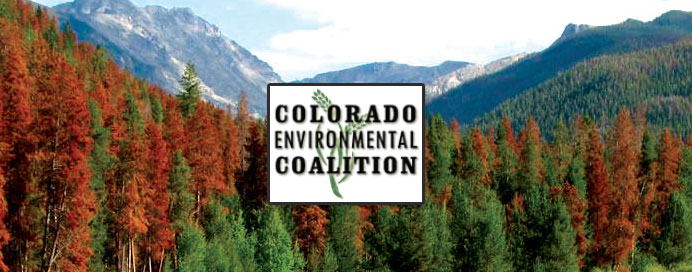
- As a result of warmer winters and increased drought, a pine beetle infestation is decimating Colorado's lodgepole pine forests.
- Increased temperatures, a thinner snowpack, and the change in weather patterns could reduce Colorado's water supply.
- Colorado's tourism industry could suffer as skiing, fishing, and other outdoor recreational pursuits are impacted by changing precipitation patterns.
Current Federal Legislative Action
The United States can no longer afford an outdated and expensive energy policy dependent upon dirty, nonrenewable energy sources. The long overdue American Clean Energy and Security Act (ACES/H.R. 2454) is the most important opportunity in decades for the United States to address global warming, unleash the power of clean energy, and create millions of green jobs. The bill was officially passed by the House on June 26th, 2009! Work has begun in the Senate to create a sister version of this historic piece of climate legislation
ACES proposes to address global warming by establishing a first-ever cap (or limit) on pollution that causes global warming. Also referred to as "emissions trading," cap-and-trade aims to curb pollution by providing financial incentives for reducing emissions of pollutants. When levels of acid rain producing gasses rose to dangerous levels, for example, the United States adopted cap-and-trade policy as part of the Acid Rain Program. The program fixed a gradually decreasing number of emission permits (the "cap") which power plants had to obtain in order to emit acid rain producing gasses.
Additionally, ACES promotes clean energy by establishing a renewable electricity standard (or "RES") requiring 20% of electricity to come from renewable sources (i.e. wind, solar, and biofuels) and increases in energy efficiency by 2020.
Furthermore, the bill accounts for the costs that energy-intensive industries and the American public, especially low to mid income consumers, will face as a result of a transition to a clean energy economy. ACES marks the United States' most significant opportunity to establish itself as a leader in the international clean energy movement and fight against global warming!
Colorado's Response
Colorado has taken several steps to join other states in reducing global warming pollution:
-
In 2004, Colorado voters approved a CEC-backed renewable energy standard, Amendment 37, that requires electric utilities to ensure that a portion of the electricity they generate comes from renewable resources like wind and solar.
- The Colorado Legislature doubled this renewable energy standard in its 2007 session to require that utilities obtain 20% of electricity from renewable sources by 2020.
- In November 2007, Governor Bill Ritter set a statewide goal for cutting global warming pollution by 20% by 2020 and 80% by 2050. Colorado Climate Action Plan
Yet, Colorado must act even more aggressively to implement concrete policies that reduce global warming pollution and make our state a leader in the transition to a clean energy economy. To accomplish this, the Colorado conservation community recommends Colorado take the following steps:
- Increase Energy Efficiency and Conservation
Increasing energy efficiency and conservation is the fastest, cheapest, and most reliable way to reduce consumer's electric bills, reduce energy demand, and reduce the emission of greenhouse gases. Stronger building codes, appliance efficiency standards, lighting efficiency standards, industrial efficiency standards, and investment in utility-scale efficiency programs are necessary. Efficiency and conservation measures have the potential to help all consumers and in particular to save low income consumers money on their utility bills. - Increase the Generation of Clean Electricity
Colorado has tremendous capacity for increasing the electricity generated from clean, renewable resources like wind and solar power. Our state should expand the renewable electricity standard and set a clean energy standard that leads to the retirement of polluting coal-fired power plants and stops construction of new coal-fired power plants. Colorado should also create low-cost financing programs to make clean energy affordable and accessible to all Colorado home and business owners. - Reduce Vehicle Emissions and Miles Traveled
Transportation accounts for 23 percent of greenhouse gas emissions in Colorado. Colorado should adopt the Clean Cars Program, already passed in 16 states, which will reduce emissions and speed widespread use of hybrid electric vehicles, require sale of energy-saving tires, reduce growth in vehicle miles traveled, and push the federal government for increased fuel efficiency standards for all vehicles. Our state should also promote land use patterns and transportation investments that reduce the amount that Coloradans have to drive – by providing transit, bike and pedestrian alternatives and by building homes closer to jobs, stores and transit – saving both commute time and tax dollars in the process.
Global warming presents an unprecedented challenge that requires immediate action. Simple steps need to be taken to increase energy efficiency and conservation, develop new clean energy technologies, and reduce emissions in the transportation and electric utility sectors. If followed, these steps can reduce human induced greenhouse gas emissions and help us aver the most severe consequences of global warming. Meanwhile, we can increase our air quality, keep our water clean, and preserve Colorado's natural environment for the enjoyment of residents, wildlife, and visitors!